Tags: BNSF / BHE / Pilot
This fanpage is not officially affiliated with Berkshire Hathaway: Disclaimer
Berkshire Hathaway quietly spends more on American infrastructure than most countries — $20.9 billion in capital expenditures in 2025 alone 1. From BNSF's 32,500 miles of railroad to BHE's renewable energy empire and Pilot's 900 truck stops, the conglomerate is literally building the backbone of the United States. No government grants, no subsidies, no fanfare — just retained earnings, insurance float, and a conviction that America's best days require someone to actually lay the track.
Introduction
In 2021, Warren Buffett made a claim that raised eyebrows even among the most devoted shareholders: "Berkshire owns and operates more U.S.-based infrastructure assets than are owned and operated by any other American corporation" 2. At the time, the company's domestic property, plant, and equipment exceeded $158 billion. By the end of 2025, that figure has only grown — BNSF and BHE alone spent $14.4 billion in a single year 1, while the American Society of Civil Engineers estimates the country faces a $3.7 trillion gap to bring its infrastructure to good repair 3.
The logic is elegant. Berkshire's insurance operations generate float — $176 billion at year-end 2025, up from $88 billion just a decade earlier 1. That float, combined with $46 billion in annual operating cash flows, funds a perpetual reinvestment machine. No congressional appropriations required. No bond referendums. Just a conglomerate that treats capital expenditure the way most corporations treat stock buybacks — as a core allocation priority. ↗
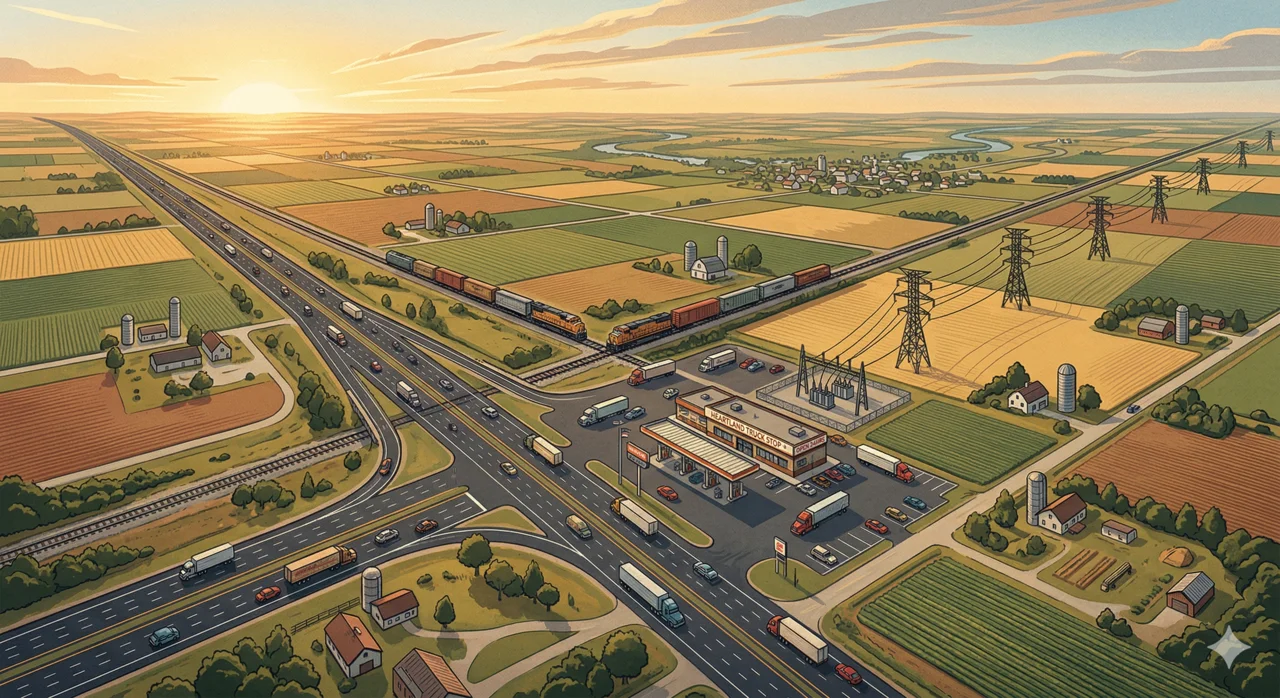
Three subsidiaries carry the weight of this infrastructure empire: BNSF Railway, Berkshire Hathaway Energy, and — increasingly — Pilot Travel Centers. Together, they account for roughly $15.3 billion of Berkshire's 2025 capital spending, maintaining and expanding networks that touch every corner of the American economy.
BNSF: The First Artery of American Commerce
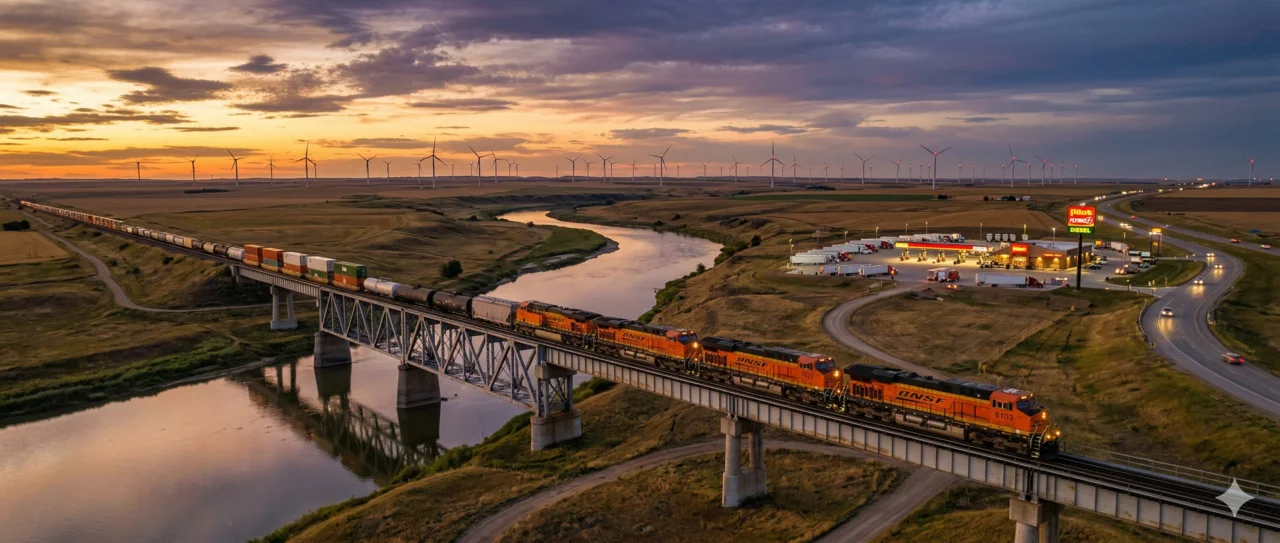
When Berkshire acquired BNSF Railway in 2010 for $34.5 billion, Buffett called it an "all-in wager on the economic future of the United States" 1. Fifteen years later, the wager has paid off handsomely — BNSF has returned $41.8 billion in cumulative dividends to Berkshire, more than the entire purchase price 1. In 2025 alone, the railroad generated $8.1 billion in net operating cash flows and sent $4.4 billion back to Omaha 1.
But the real story is not what BNSF extracts — it is what BNSF puts back. The railroad spent $3.8 billion on capital improvements in 2025: $2.84 billion on maintenance (surfacing 11,400 miles of track, replacing 2.5 million rail ties, and laying 410 miles of new rail) and $535 million on expansion projects 4. Since its formation in 1995, BNSF has invested nearly $95 billion in its network — a figure that dwarfs most state transportation budgets 5.
| Year | BNSF Capital Plan | Maintenance | Expansion |
|---|---|---|---|
| 2024 | $3.92B6 | $2.88B | ~$600M |
| 2025 | $3.80B4 | $2.84B | $535M |
| 2026 | $3.60B7 | $2.80B | $358M |
The expansion projects read like a logistics wish list for the 21st century. The Barstow International Gateway in California will create a modern intermodal hub connecting Pacific trade to the interior. A new intermodal facility near Phoenix serves one of America's fastest-growing metros. Twenty miles of third main line near Needles, California, adds capacity on the critical Southern Transcon corridor linking Los Angeles to Chicago 4. ↗
And then there is the ripple effect. In 2025, BNSF's customers invested $5.3 billion in rail-served facilities — completing 117 projects (the highest in six years) and creating over 1,200 jobs 8. U.S. Steel poured $27 million into rail infrastructure at Big River Steel Works, part of a broader $3 billion steelmaking commitment. South Dakota Soybean Processors broke ground on a $500 million plant that will process 35 million bushels annually 8. Every dollar BNSF spends on track tends to attract several more from private industry.
There is an irony worth noting. BNSF's 10-K filing acknowledges that it competes against motor carriers operating on "subsidized infrastructure" — publicly funded highways 1. Railroads receive no government infrastructure subsidy. They build and maintain their own track, their own bridges, their own signaling systems. BNSF's 32,500 route miles across 28 states represent a private transportation network with an estimated replacement cost exceeding $500 billion. It is, in essence, a parallel national highway system funded entirely by the private sector.
BHE: Powering the Energy Transition at Scale
If BNSF moves America's goods, Berkshire Hathaway Energy keeps the lights on. BHE spent $10.6 billion on capital expenditures in 2025 — more than half of Berkshire's total — making it the conglomerate's single largest infrastructure investor 1. The company serves 5.3 million retail customers, operates 29 gigawatts of generating capacity, and manages a sprawling network of transmission lines, pipelines, and power plants across the western United States and beyond 9.
The numbers tell a story of deliberate transformation. BHE has invested a cumulative $38 billion in renewable energy and storage through the end of 2025 1. It has shuttered 22 coal generation units and reduced annual greenhouse gas emissions by 30% compared to 2005 levels 1. Renewables now account for 45% of total generation, up from 15% two decades ago 9. ↗
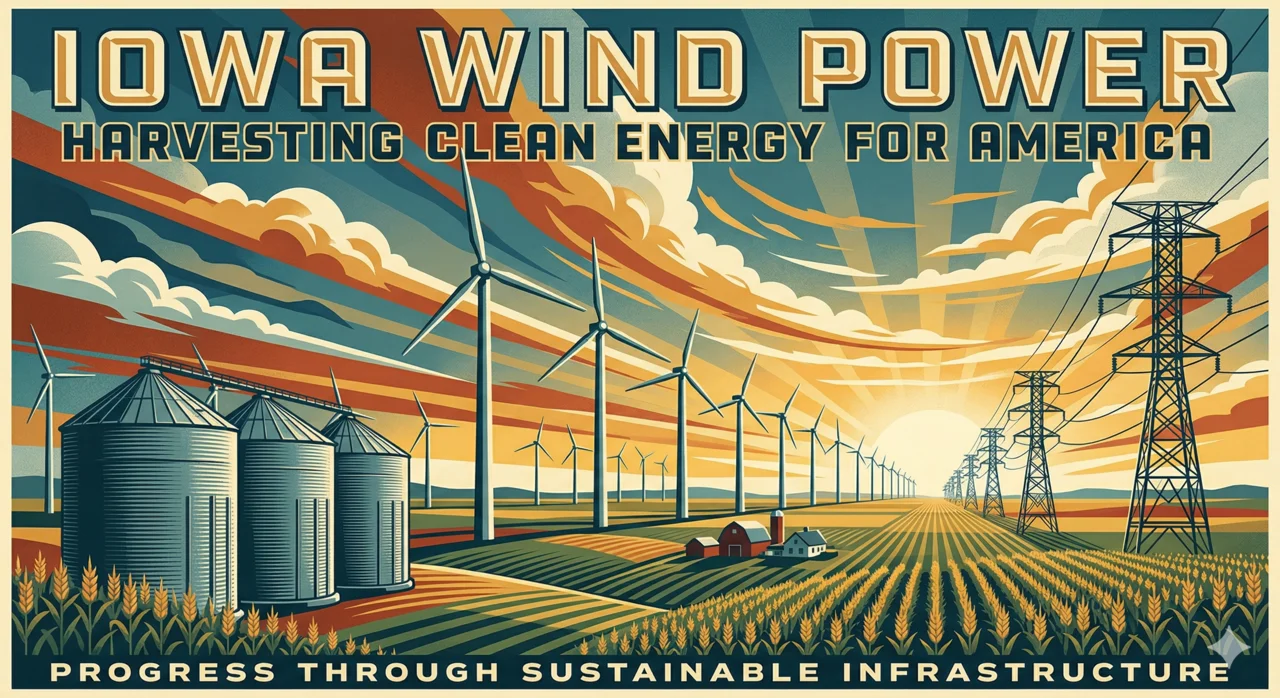
The crown jewel of this transition sits in Iowa. MidAmerican Energy, BHE's Iowa utility, operates more than 3,400 wind turbines across dozens of wind farms with 7,600 megawatts of capacity 10. In 2022, it became the first U.S. utility to generate enough wind energy to cover 100% of its retail customers' electricity demand in a full calendar year 11. The investment tab: roughly $14 billion in Iowa wind since 2004, financed entirely through utility operations and bond issuances — not a single dollar of taxpayer subsidy 10.
The physical scale is staggering. PacifiCorp alone operates 17,100 miles of transmission lines across 10 states and 65,300 miles of distribution lines connecting 900 substations 9. BHE's five interstate natural gas pipeline companies span 21,000 miles with a design capacity of 21 billion cubic feet per day 9. And looking ahead, BHE's subsidiaries have committed approximately $30.8 billion in growth and operating capital expenditure for 2024 through 2026 1.
| BHE Metric | Value | Source |
|---|---|---|
| 2025 Capex | $10.6B1 | 2025 Annual Report |
| Cumulative Renewable Investment | $38.0B1 | 2025 Annual Report |
| Coal Units Closed | 221 | 2025 Annual Report |
| GHG Reduction vs. 2005 | 30%1 | 2025 Annual Report |
| Total Generating Capacity | 29 GW9 | BHE Investor Presentation |
| Retail Customers | 5.3 million9 | BHE Investor Presentation |
| Revenue (2025) | $26.2B1 | 2025 Annual Report |
Perhaps the most forward-looking project is the North Plains Connector — a 420-mile high-voltage direct current (HVDC) transmission line that will connect the Eastern and Western electrical grids for the first time, running through North Dakota and Montana 12. With 3,000 megawatts of bi-directional capacity and an estimated cost of $3.2 billion, it represents the kind of multi-decade infrastructure bet that few private companies would dare to make. BHE U.S. Transmission owns 10% of the project, with construction expected to begin in 2028 12.
Greg Abel, now Berkshire's CEO, framed the approach in the 2025 annual letter: "BHE will only invest capital where the risks and rewards are balanced... Near-term opportunities are significant, and BHE will pursue them selectively" 1. In 2025, BHE produced $8.4 billion in net operating cash flows — consistent with its five-year average, and more than enough to sustain its build-out pace 1.
Pilot: The Highway Network Gets a Berkshire Makeover
The newest — and perhaps most underappreciated — pillar of Berkshire's infrastructure empire is Pilot Travel Centers. Fully owned by Berkshire since January 2024 (when the Haslam family sold their remaining 20% stake for $2.6 billion) 13, Pilot operates over 900 locations in 44 U.S. states and 5 Canadian provinces, serving 1.2 million guests daily and supplying 12 billion gallons of fuel annually to commercial fleets 14. It is the largest travel center chain in North America and the largest over-the-road diesel purveyor in the United States.
Pilot spent $941 million on capital expenditures in 2025, up from $705 million in 2023 — a 33% increase in two years 1. The centerpiece is "New Horizons," a $1 billion program launched in 2022 to fully remodel over 400 Pilot and Flying J travel centers nationwide 15. The overhaul covers everything from new restrooms and driver lounges to expanded kitchens, self-checkout systems, and digital fueling technology. As of early 2024, more than 200 locations had been completed 16. The investment is working — guests are 80% more likely to return after visiting a remodeled location, and Pilot's Pro Preference score (drivers choosing Pilot over competitors) rose from 27% in 2022 to 35% in 2025 17.
But the real infrastructure play is what Pilot is building for the future. Through a partnership with General Motors and EVgo, Pilot is deploying a nationwide electric vehicle fast-charging network. By September 2025, the collaboration had opened over 200 charging locations across nearly 40 states, with approximately 875 DC fast-charging stalls capable of delivering up to 350 kilowatts 18. The target: 2,000 stalls at up to 500 locations 18.
In March 2025, Pilot became the first travel center network in the United States to offer B99 biodiesel — a 99.9% biodiesel fuel that reduces tailpipe carbon emissions by up to 90% compared to conventional diesel 19. Launched in partnership with ADM and PepsiCo, with Optimus Technologies providing engine retrofit technology, the program is rolling out across Decatur (Illinois), Des Moines (Iowa), and Dallas (Texas) 19.
| Year | Pilot Capex | Revenue | Pre-tax Earnings |
|---|---|---|---|
| 2023 | $705M1 | $56.8B13 | ~$1.01B |
| 2024 | $799M1 | ~$46.9B13 | $614M |
| 2025 | $941M1 | $42.2B17 | $190M |
Here is the telling detail: Pilot's revenues have declined from $72.7 billion in 2022 to $42.2 billion in 2025 as diesel prices fell, and pre-tax earnings dropped to $190 million 17. Most corporate owners would slash capital spending in response. Berkshire did the opposite — increased it by 33%. That is the luxury of being owned by a conglomerate with $46 billion in annual cash flow. You invest through the cycle, not around it.
The Private Infrastructure Machine
Add it all up and the picture is remarkable. Berkshire Hathaway spent $20.9 billion on capital expenditures in 2025 — and forecast roughly $15 billion for BNSF and BHE alone in 2026 1. To put that in perspective, the U.S. federal Bipartisan Infrastructure Law allocates approximately $62 billion per year across all transportation formula programs 3. One corporation, headquartered in Omaha with a staff of 30 at the holding company level, deploys roughly a third of that figure annually — entirely from private capital.
The funding mechanism is what makes it sustainable. Berkshire's balance sheet carries $1.2 trillion in assets, of which shareholders contributed $698 billion — meaning approximately $1.75 of assets exist for every dollar shareholders invested 1. That leverage comes not from debt but from float: the $176 billion pool of insurance premiums collected before claims are paid. Float costs Berkshire nothing most years (the underwriting operations have been profitable for two decades) and sits invested in Treasury bills and operating businesses while waiting to be called. ↗
The result is a self-reinforcing loop. Insurance float funds the balance sheet. Operating earnings from BNSF, BHE, and Pilot are reinvested into physical infrastructure. That infrastructure generates more earnings. Those earnings fund more investment. No dilution, no government dependency, no quarterly earnings pressure to cut maintenance budgets. As the 2025 annual report notes, BNSF alone recorded $2.4 billion in repairs and maintenance expense on top of its $3.8 billion capital budget 1 — the kind of spending that publicly traded railroads face constant analyst pressure to reduce.
Conclusion
There is something almost old-fashioned about Berkshire's approach to infrastructure. While politicians debate bills and investors chase software multiples, the conglomerate quietly pours $21 billion a year into the physical substrate of the American economy — the rails that carry grain and automobiles, the transmission lines that deliver wind power to homes, the truck stops where 1.2 million travelers refuel each day. It is not glamorous work. Replacing 2.5 million rail ties does not trend on social media. Installing 875 EV charging stalls at highway rest stops will never generate the buzz of a product launch.
But it is precisely this willingness to do the unglamorous, capital-intensive work — decade after decade, through profit cycles and fuel price swings — that makes Berkshire what it is. Buffett's "all-in wager on the economic future of the United States" was never just about buying railroads and utilities. It was about building the kind of institution that could sustain the investment America requires, funded by its own earnings rather than political goodwill. In an era when the country faces a $3.7 trillion infrastructure gap, having a private-sector partner willing to deploy $21 billion a year is not just good business — it is a national asset.
References
-
Berkshire Hathaway 2025 Annual Report - berkshirehathaway.com ↩↩↩↩↩↩↩↩↩↩↩↩↩↩↩↩↩
-
Buffett Touts Berkshire's Infrastructure Might - bnnbloomberg.ca ↩
-
2021 Report Card for America's Infrastructure - infrastructurereportcard.org ↩↩
-
BNSF Announces $3.8 Billion Capital Investment Plan for 2025 - bnsf.com ↩↩
-
BNSF 2024 Impact Report - bnsf.com ↩
-
BNSF 2024 Capital Investment Plan - bnsf.com ↩
-
BNSF 2026 Capital Investment Plan - bnsf.com ↩
-
BNSF Railway Customers Invest More Than $5.3 Billion in 2025 - bnsf.com ↩↩
-
BHE 2025 Investor Presentation - berkshirehathaway.com ↩↩↩↩
-
Berkshire Hathaway Energy - rationalwalk.com ↩↩
-
MidAmerican Energy Wind Generation — 100% in 2022 - midamericanenergy.com ↩
-
BHE U.S. Transmission Joins Grid United for North Plains Connector - businesswire.com ↩↩
-
Pilot's Drop in Profits Led to Lower Valuation - freightwaves.com ↩
-
Pilot Flying J - wikipedia.org ↩
-
Pilot Company Unveils $1 Billion New Horizons Investment - newsroom.pilotcompany.com ↩
-
Pilot Travel Centers Continues Growth in 2024 - newsroom.pilotcompany.com ↩
-
Pilot Had Weaker Performance in '25: Berkshire Letter - finance.yahoo.com ↩↩
-
Pilot, GM and EVgo Open Over 200 Fast Charging Locations - investors.evgo.com ↩↩
-
Pilot Becomes First Travel Center Network to Offer B99 Biodiesel - newsroom.pilotcompany.com ↩↩