Tags: IMC / Warren Buffett / History
This fanpage is not officially affiliated with Berkshire Hathaway: Disclaimer
On October 25, 2005, an Israeli executive named Eitan Wertheimer posted a one-and-a-quarter-page letter to Omaha. On July 5, 2006, the $4 billion deal that letter began — Berkshire Hathaway's first acquisition outside the United States — closed2. Seven days later, on July 12, the Second Lebanon War broke out; Hezbollah rockets fell on the Galilee thirty kilometres from Iscar's main plant. Across the thirty-four days that followed, Warren Buffett rang Eitan every day from Omaha1. In the annual letter he published seven months later, devoting roughly thirty paragraphs to the new acquisition, he did not use the word "Lebanon" once.
Introduction
This piece is built on a single observation. Of all the public language Berkshire generated about Iscar between the day Buffett opened Eitan's letter and the day Eitan's father Stef died — 26 March 202510, one year and three months before the deal's twentieth anniversary — the most revealing line is one that was not written. The 2006 annual letter, Buffett's first chance to address the world about the company he had just bought, contains a thirty-paragraph Iscar narrative, the verbatim opening of Eitan's letter, the September site-visit photographs, and the company-line praise for Israeli "brains and energy"4. It contains nothing about the 4,000-rocket campaign that interrupted those thirty paragraphs in real time. The plant closed. The Wertheimers told Buffett the company would emerge stronger. It did.
Twenty years later, with Iscar — now IMC International Metalworking Companies — at $4.1 billion in 2025 revenues8, with Tungaloy still standing in Iwaki, and with Stef Wertheimer in the ground, the silence in the 2006 letter looks less like an editorial choice and more like the operating manual. What follows reconstructs the year-by-year evidence of what Buffett wrote about Iscar across two decades, and the years he chose to write nothing at all. The 2009 letter carries the only direct acknowledgment that war was ever part of the operating environment, a single passing line — "Nothing stops Israel-based Iscar — not wars, recessions or competitors"5. By 2011, after a tsunami took out the Iwaki plant, Buffett would write that Tungaloy's workforce "deserve your admiration and thanks"6. The arithmetic of $6.05 billion of capital paid out across 2006 and 2013 is conventional27. The arithmetic of when Buffett spoke and when he didn't is not.
The Letter
Berkshire's pipeline runs on letters. Ralph Schey wrote one in 1985 that landed Scott Fetzer at the bottom of a botched auction14, a domestic template the ↗ piece walked through last month. Eitan's letter, twenty years later, was the international one. Buffett quoted from it directly in the 2006 annual report: "We have for some time considered the issues of generational transfer and ownership that are typical for large family enterprises, and have given much thought to ISCAR's future. Our conclusion is that Berkshire Hathaway would be the ideal home for ISCAR. We believe that ISCAR would continue to thrive as a part of your portfolio of businesses."4 No banker had been engaged. No auction was run. The Wertheimers met Buffett in Omaha three weeks after the letter arrived; the deal was agreed in principle before they left.
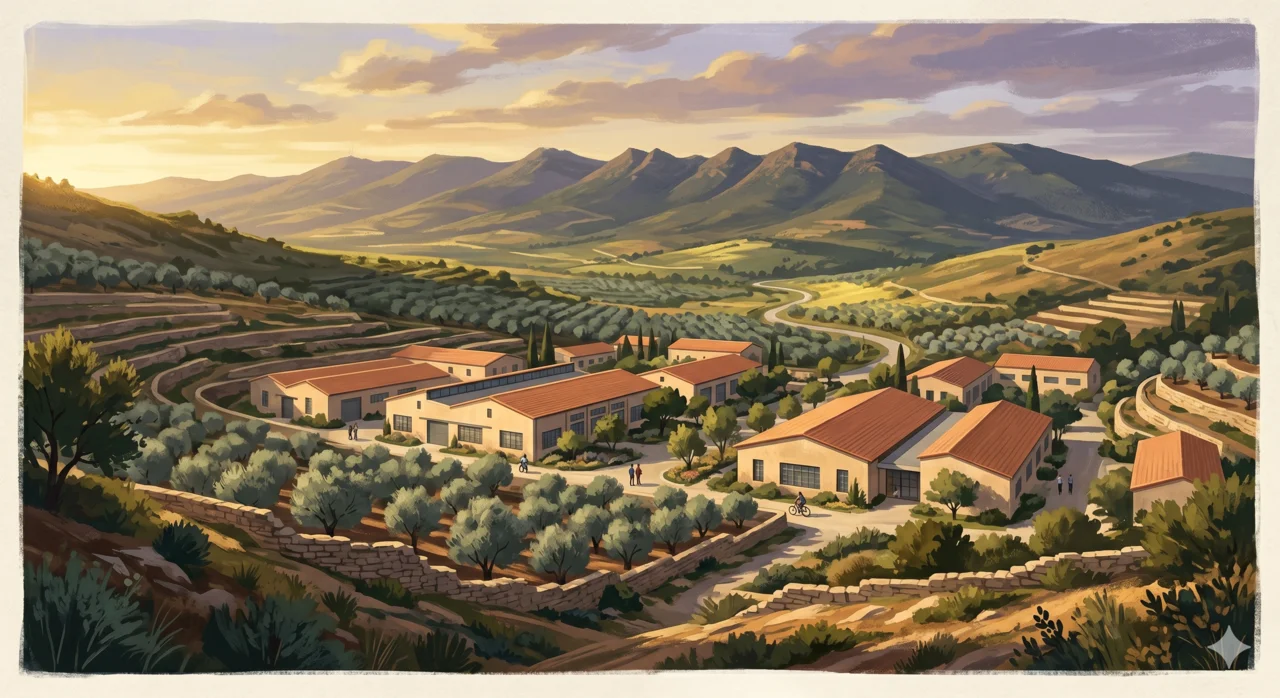
The financial structure carried the same template Schey's letter had set. Berkshire bought 80% of Iscar for $4 billion in cash, valuing the entire company at $5 billion2. The Wertheimer family retained 20% — the word Buffett used in the letter was partner, not seller. Eitan stayed as chairman; Jacob Harpaz, the CEO who had run the company day-to-day for years, kept that title. Iscar was headquartered at Tefen Industrial Park in the western Galilee, a place the Wertheimers had not just bought into but had literally built. The company's name was a contraction of Israel Carbide, registered in 1952 when Stef Wertheimer was twenty-six and the entire operation occupied his backyard.
By the time Buffett signed, Iscar was the second-largest metalcutting tool company in the world. Its products — tungsten-carbide inserts, end mills, drills — sat inside the CNC machines making every part of the industrial economy from car engines to aircraft turbines. The competitive position was the kind Berkshire likes: a global oligopoly with Sandvik (Sweden) and Kennametal (United States), high R&D barriers, recurring consumable revenue, and a management team that referred to the tooling as brains in tungsten. The acquisition closed in early July 2006. Buffett's plane was due in Israel in September for the formal welcome tour. Between those two dates, the war happened.
Tefen, Summer 2006
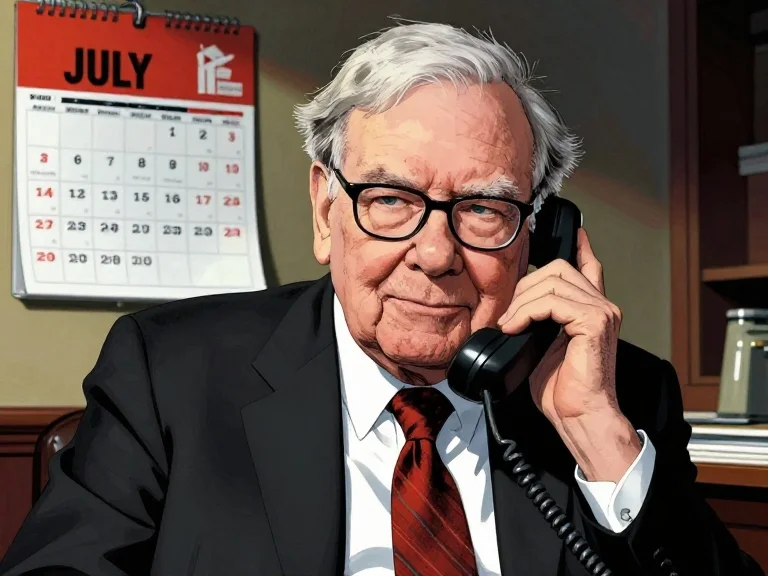
Tefen sits in the Misgav region of the Upper Galilee. The Lebanese border runs along the ridgeline to the north, roughly thirty kilometres away — well inside the range of the Katyusha 122mm artillery rockets Hezbollah fired into Israel during the war, and inside the range of the longer Fajr-3 and Fajr-5 systems Hezbollah also used. Across the thirty-four days from July 12 to August 14, 2006, roughly 4,000 rockets struck northern Israel, killing 44 civilians and displacing several hundred thousand from communities the Wertheimer industrial parks were designed to keep populated19. Thomas Friedman, writing for the New York Times on August 11 — three days before the ceasefire — noted in passing that "Iscar, located in northern Israel, was temporarily closed due to Hezbollah rocket attacks"3. The line is the only contemporaneous, named-journalist confirmation of the closure in the public record. Buffett, in Omaha, was on the phone.
Eitan's account to The Forward in May 2013 is the closest thing we have to a direct workforce-side narrative: the Tefen plant "came under daily rocket attacks," and Buffett "phoned every day to check on the plant"1. Eitan and Stef assured him the company would weather the war and emerge stronger. It did. The plant reopened after the ceasefire. Buffett's September visit went ahead as scheduled, three weeks later. He did not change his mind about the deal, did not seek a price adjustment, did not commission a political-risk review. The line he gave reporters afterwards, recalled in Eitan's Forward interview, was: "I did not worry any more about putting an investment in Israel than I would about the United States."1
That is the line that lives in the public record. What does not live there is what was happening inside the plant during those weeks — whether shifts continued, whether material moved, what the workforce was doing on the days the rockets fell closest. No verified worker testimony has been published in any English-language outlet. No Iscar press release from those weeks is publicly available. The 2006 annual letter, when it came out the following February, addressed Iscar at length and addressed the war not at all. The acquisition narrative reads as though those thirty-four days never happened.
What Buffett Wrote, 2006–2025
The proprietary asset of this article is a two-column ledger: what happened to Iscar in each year of Berkshire ownership, and what Buffett actually wrote about it in the annual letter that followed. The asymmetries are the whole point.
| Year | What happened | What Buffett wrote |
|---|---|---|
| 2006 | Deal closes July 5; Second Lebanon War July 12 – Aug 14; plant temporarily closed; Buffett site visit September. | "Berkshire purchased 80% of ISCAR for $4 billion… we — and I mean every one of us — have never been more impressed with any operation."4 No mention of the war. |
| 2007 | First full year; Korean plant visit; Dalian, China plant opens late in the year. | "Iscar, led by their CEOs… performed magnificently in 2007."15 |
| 2008 | Late-November acquisition of Tungaloy, a leading Japanese metalcutting maker; first Iscar bolt-on. | "The most noteworthy of these acquisitions was Iscar's late-November purchase of Tungaloy… Iscar's growth since our purchase has exceeded our expectations — which were high."16 |
| 2009 | Global recession bites; metalcutting demand falls; Tungaloy integration ongoing. | "Nothing stops Israel-based Iscar — not wars, recessions or competitors… Though Iscar's results were down significantly from 2008, the company regularly reported profits."5 |
| 2010 | Profits up 159%; recovery led by Asia; Tungaloy turnaround visible. | "At Iscar, profits were up 159% in 2010… one far superior to that of Iscar's main competitors."17 |
| 2011 | Tōhoku earthquake/tsunami March 11; Tungaloy Iwaki plant evacuated, then rebuilt in nine months; sets sales record despite the disaster. | "Tungaloy went on to set a sales record in 2011. I visited the Iwaki plant in November and was inspired by the dedication and enthusiasm of Tungaloy's management, as well as its staff. They are a wonderful group and deserve your admiration and thanks."6 |
| 2012 | Iscar named for the first time as a member of the "Powerhouse Five" — BNSF, BHE, Iscar, Lubrizol, Marmon — earning >$10B aggregate pre-tax. | "BNSF, Iscar, Lubrizol, Marmon Group and MidAmerican Energy… had aggregate earnings of $10.1 billion."18 |
| 2013 | April 29: Wertheimer family exercises put option on remaining 20%; Berkshire pays $2.05B for full ownership. | "The Wertheimer family elected to exercise a put option it held, selling us the 20% of the business it retained when we bought control in 2006."7 |
| 2025 | IMC revenues $4.1 billion (+3.9% YoY); pre-tax earnings essentially unchanged; Stef Wertheimer dies March 26 at 98. | "Operational execution was strong across the group, and specifically at Precision Castparts, Marmon, IMC…"8 |
Two patterns sit in this ledger. The first is that across nine years of letters, the only line that names a single disruption Iscar weathered — "not wars, recessions or competitors" — appears in the 2009 letter, three full years after the war it nominally references, and is framed as a flex rather than disclosure. The second is that the 2011 letter — written about a Japanese plant the workforce had just rebuilt in nine months from forty kilometres south of Fukushima Daiichi — is the only Iscar passage across the entire run that explicitly thanks the workers. The 2006 letter, which had every reason to do so, did not.
Iwaki, March 2011
Tungaloy was Iscar's first international bolt-on, acquired in late November 2008 for an undisclosed sum in the ¥80 billion range16. The headquarters and main plant sat in Iwaki City, Fukushima Prefecture, on the Pacific coast — roughly forty kilometres south of the Fukushima Daiichi nuclear power station. At 14:46 local time on March 11, 2011, the Tōhoku earthquake hit. The tsunami arrived along the Iwaki coastline within an hour. Tungaloy's plant suffered earthquake damage to production buildings; approximately 1,400 employees were evacuated as the radiation situation at Daiichi escalated over the following days20. Initial reporting targeted a production restart the week of April 11 — roughly four weeks after the disaster. Buffett's previously scheduled March visit to Japan was cancelled.
Tungaloy then did something the 2006 Tefen workforce never had a chance to do in print: it set a sales record in the year of the catastrophe. Buffett's November 2011 visit to Iwaki was the rescheduled inspection trip, this time including the opening ceremony of a new tungsten-carbide tool plant that the company had completed in nine months on the existing site. The press materials from the day record him telling the assembled workforce, "Japan knows how to make things. That counts. And it makes things the world wants"13. The phrasing did not survive into the annual letter — what survived was the line about admiration and thanks. The contrast with 2006 is not subtle. In 2006, Buffett's worry-management technique was a daily phone call he never wrote about. In 2011, with the same workforce template tested by a different catastrophe on a different continent, he flew in personally and put the gratitude on paper.
What the two episodes share is the operating philosophy that Buffett bought when he bought Iscar in the first place. He did not buy tungsten. He bought management he could trust to keep the company alive under conditions he was not on the ground for, and a workforce raised on the assumption that the company was worth keeping alive. The 2009 "not wars" line, the 2011 "admiration and thanks," and the 2013 buyout of the remaining 20% — paid out at $2.05 billion to a family that had every right to ask for more after seven years of I told you so7 — are three different points on the same line.
Stef
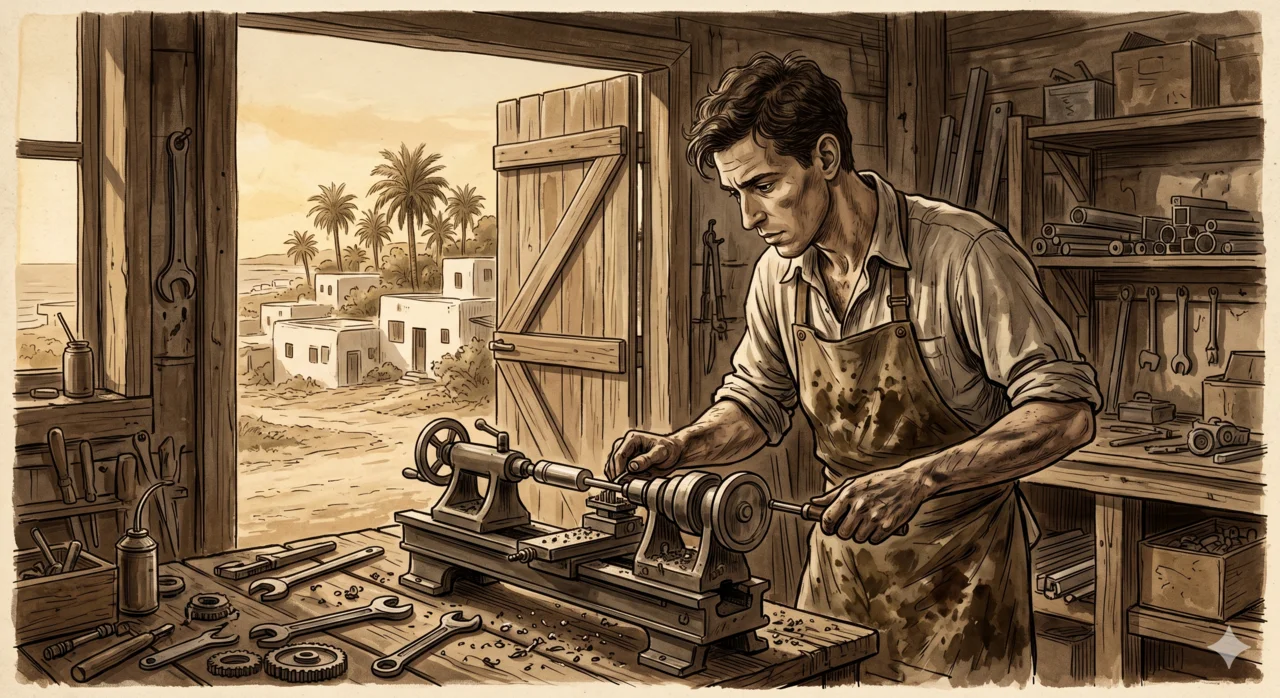
Stef Wertheimer was born in Kippenheim, Baden, in 1926. He was eleven when his family fled Hitler's Germany in 1937 and settled in Mandatory Palestine. He served in the British Royal Air Force during the Second World War as a teenage technician, where he learned the metal-cutting and lathe skills he would carry into a backyard tool shop in Nahariya in 1952. The shop's name, ISCAR, was a contraction of Israel Carbide. By the early 1980s it was big enough that he relocated it inland, away from the coastal-strip risk, to a hillside above the Druze and Arab villages of the western Galilee. There he built Tefen Industrial Park11, the first of what would become seven such parks — Tefen, Tel Hai, Dalton, Lavon, and Omer in Israel; Nazareth, opened in April 2013 as the first industrial park in an Arab Israeli city; and Gebze in Kocaeli, Turkey10.
The thesis under those parks was not, in Stef's own framing, primarily commercial. In a Globes interview late in life, he described it as "a Middle East Marshall Plan for the establishment of 100 industrial parks at a cost of hundreds of millions of dollars that will replace struggle with common industrial parks."9 He described the goal as "the training of workers who will be employed at the parks, rather than being unemployed and joining terrorist organizations"9 and, more bluntly, "The parks will keep people busy with work instead of terror"9. Whether the framing reads as visionary or as the cleaned-up version of a complicated political situation depends on the reader's priors. The point that interests this piece is more narrow. The Wertheimer parks employed, and still employ, Druze, Christian, Muslim, and Jewish residents of the surrounding settlements alongside one another12. Iscar's own staff includes Israeli Arabs in senior positions. That was the workforce Buffett had bought 80% of in July 2006 and that was on shutdown footing during the war seven days later.
Stef died on 26 March 2025 at the age of 9810. He had lived to see his company become the second-largest metalcutting tool company in the world, the first non-US Berkshire subsidiary, an Abel-era industrial pillar with $4.1 billion in revenues8, and a Marshall-Plan-in-miniature for the cross-community workforce the original Tefen park was designed for. Berkshire's 2025 annual letter, Abel's first, names IMC among the manufacturing standouts and does not mention Stef's death8. That, too, is the operating manual. The Wertheimer-family relationship that Buffett built across 1¼ pages and twenty years was a private one; the only register in which Berkshire ever transacted it publicly was through the annual letter, and the annual letter never made the transaction loud.
The Template, Twenty Years On
What Berkshire bought in July 2006 was not just a tool company. It was the first iteration of an acquisition template that has run, with variations, across the entire decade since: a minority-comfortable, founder-trust, no-integration, no-public-worry international stake whose central operating premise is that the management team running the company is the moat. The Japanese trading-house positions, carried at $35.4 billion in market value at year-end 2025 across five stakes ranging from 9.7% to 10.8%8, are the largest expression. In his final letter as chairman, Buffett wrote that he expects "Greg and his eventual successors will be holding this Japanese position for many decades"21. The 2026 Tokio Marine deal — Berkshire's 2.49% stake plus a ten-year reinsurance and global M&A partnership, the first Japanese financial institution to receive a Berkshire equity investment — runs the same template, with a different industry and a different generation of management. The ↗ piece three weeks ago laid out the BHRG side of that arrangement; the Iscar template is, structurally, what made it possible.
Inside Berkshire's industrial portfolio, the same template shows up at ↗ last week — a Cleveland specialty-chemicals business bought from a confident management team that stayed in place — and at the OxyChem closing of January 2026, where Rebecca Liebert now runs both. Greg Abel's first hundred days included the Tokio Marine arrangement, the OxyChem closing, and the first buyback in eighteen months; the ↗ piece in April catalogued the sequence. None of those moves required Abel to break new ground on Buffett's international strategy. They required him to keep running the Iscar template.
The IMC numbers, twenty years in, are the quietest possible vindication.
| Berkshire's Iscar/IMC line item | Amount | Date |
|---|---|---|
| Initial 80% acquisition2 | $4.00 B | July 5, 2006 |
| Remaining 20% buyout7 | $2.05 B | April 29, 2013 |
| Cumulative purchase consideration | $6.05 B | — |
| IMC revenues, full year8 | $4.10 B | FY2025 |
| IMC goodwill on Berkshire balance sheet8 | $14.21 B | Dec 31, 2025 |
IMC's 2025 revenues of $4.1 billion8 are roughly the size of an entire Powerhouse Five member's annual sales, all on its own, twenty years after the deal closed during a war. The goodwill on Berkshire's balance sheet for IMC at year-end 2025 was $14.21 billion8 — more than double the cumulative purchase consideration. Pre-tax earnings were essentially unchanged year on year. The Wertheimers' assurance in summer 2006 — that the company would emerge stronger — is now visible across two decades of disclosure that does not, in any year except 2009 and 2011, name the catastrophes it emerged from.
Conclusion
The story that the Iscar acquisition was the moment Berkshire learned to operate internationally is the obvious one and it is correct. The story this article wants to add alongside it is that the same acquisition was the moment Berkshire learned how not to operate internationally — that the technique that made Iscar work in 2006 was the technique of writing nothing about the war, asking for no concessions, commissioning no political-risk review, calling Eitan every day from Omaha, and trusting a family that had built an industrial park as an act of regional citizenship to keep the lights on through a thirty-four-day artillery campaign. The 2006 annual letter is a public document in which the absence of language about a war is the central evidence about how Berkshire intended to run its first non-US subsidiary. The 2009 "not wars" line is the second piece of evidence, played as a flex; the 2011 "admiration and thanks" is the third, played as a thank-you note. There is no fourth.
Stef Wertheimer mailed his son Eitan into the room with the letter that landed in Omaha on October 25, 2005. Stef did not live to see the twentieth anniversary of the deal he helped his son close; he died fifteen months short of it. Buffett, who has now handed the chairman's letter to Greg Abel, did not name Stef in the 2025 letter that followed his death. The deal does not need that mention to do its work. It has been doing its work continuously since the first week of July 2006, in a Galilee tool-making plant that closed safely during a war and reopened to a CEO who had been on the phone with Omaha every day, and in an Iwaki tungsten-carbide plant that rebuilt itself in nine months under the eye of the same workforce template, on the other side of the world. The honor in this story is the one Buffett structured into the way he did and did not write about it: a record clean of drama, light on adjectives, and continuous across two catastrophes with no second's break in the trust.
References
-
Warren Buffett's $2B Bet on Israel — Eitan Wertheimer interview - forward.com ↩↩↩
-
Berkshire Hathaway 2006 Annual Report — Iscar acquisition disclosure - berkshirehathaway.com ↩↩↩↩
-
Thomas L. Friedman: Israel was focused on Warren Buffett, not on war - deseret.com ↩
-
Berkshire Hathaway 2006 Annual Report, chairman's letter — verbatim Eitan Wertheimer letter quote and Israeli site-visit narrative, lines 289–321 of the published text. See 2 above. ↩↩
-
Berkshire Hathaway 2009 Annual Report — "Nothing stops Israel-based Iscar — not wars, recessions or competitors" - berkshirehathaway.com ↩
-
Berkshire Hathaway 2011 Annual Report — Tungaloy tsunami recovery and Iwaki visit - berkshirehathaway.com ↩
-
Berkshire Hathaway 2013 Annual Report — IMC remainder buyout, $2.05B for 20%, April 29 2013 - berkshirehathaway.com ↩↩
-
Berkshire Hathaway 2025 Annual Report — IMC 2025 revenues $4.1B (+3.9%), pre-tax essentially unchanged, goodwill $14.2B - berkshirehathaway.com ↩↩↩↩↩↩
-
Stef Wertheimer still dreams of Middle East Marshall Plan - globes.co.il ↩↩↩
-
Stef Wertheimer — biography, death March 26 2025, industrial-parks list - en.wikipedia.org ↩↩↩
-
The $4 Billion Man — Hadassah Magazine profile of Stef Wertheimer, November 2007 - hadassahmagazine.org ↩
-
Migdal Tefen — industrial council, 62 factories, Druze/Christian/Muslim/Jewish employment - en.wikipedia.org ↩
-
Warren Buffett visits Tungaloy's Iwaki headquarters, November 21 2011 — "Japan knows how to make things" - businesswire.com ↩
-
Lawrence A. Cunningham, Berkshire Beyond Buffett: The Enduring Value of Values (Columbia Business School Publishing, 2014), page 34 — Stef Wertheimer founding biography; Eitan-letter origin. ↩
-
Berkshire Hathaway 2007 Annual Report — Iscar "performed magnificently"; Korea TaeguTec visit; Dalian plant - berkshirehathaway.com ↩
-
Berkshire Hathaway 2008 Annual Report — Tungaloy acquisition disclosure (price not separately disclosed; press reporting estimates ~¥80 billion) - berkshirehathaway.com ↩
-
Berkshire Hathaway 2010 Annual Report — Iscar profits up 159% in 2010 - berkshirehathaway.com ↩
-
Berkshire Hathaway 2012 Annual Report — "Powerhouse Five" introduced, aggregate $10.1B pre-tax - berkshirehathaway.com ↩
-
2006 Lebanon War — rocket count (~4,000 into northern Israel), Israeli civilian casualties (44), evacuee estimates - en.wikipedia.org ↩
-
Iscar Says Japan Plant Will Resume Production Mid-April — 1,400 Tungaloy employees evacuated, restart targeted week of April 11, 2011 - canadianmetalworking.com ↩
-
Berkshire Hathaway 2024 Annual Report — Warren Buffett's final letter as chairman; Japanese trading-houses to be held "for many decades" - berkshirehathaway.com ↩