Tags: History / BHRG / Japan
This fanpage is not officially affiliated with Berkshire Hathaway: Disclaimer
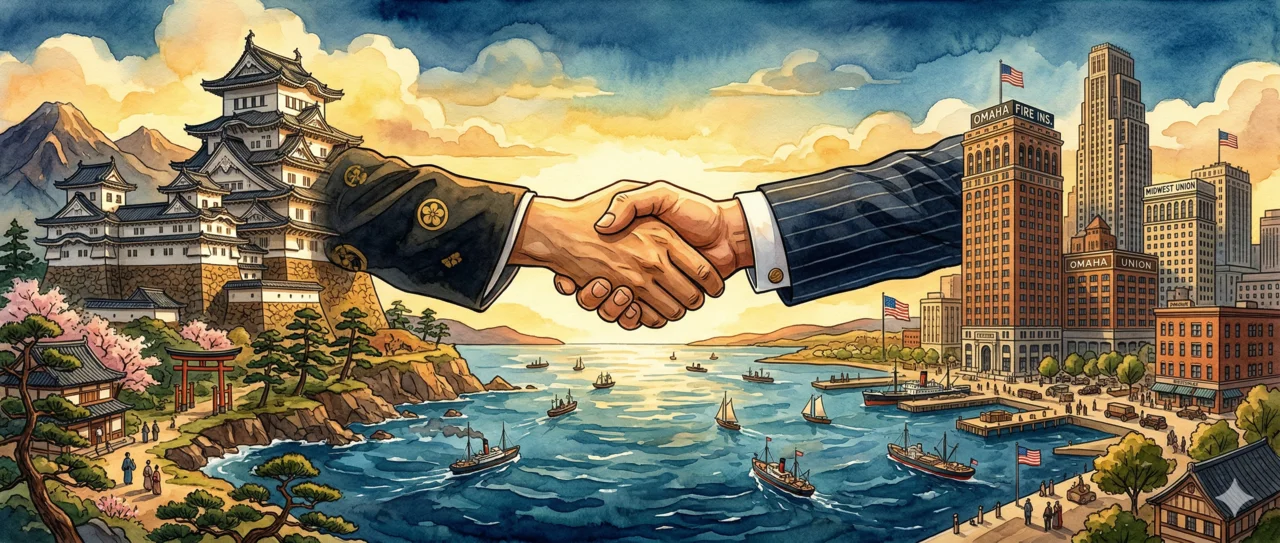
Greg Abel's first major deal as CEO is not a railroad, not an energy company, and not another American insurer. It is a $1.8 billion stake in Tokio Marine Holdings — Japan's oldest insurance company, founded in 1879, three years before Berkshire's own textile mill predecessor was incorporated. The partnership pairs two institutions with eerily parallel philosophies, adds reinsurance float through a quota-share agreement, and arrives at a moment when marine insurance premiums in the Persian Gulf have exploded by as much as 67 times their pre-war levels 12. For Berkshire shareholders, this is a story about insurance economics, Japanese history, corporate culture, and the ancient business of insuring ships through dangerous waters.
Introduction
On March 23, 2026, Berkshire Hathaway's National Indemnity Company (NICO) announced it would acquire 48.2 million treasury shares of Tokio Marine Holdings for ¥287.4 billion (~$1.8 billion), securing a 2.49% stake in Japan's largest property and casualty insurer 1. The deal is not a simple equity investment. It comes packaged with a Whole Account Quota Share (WAQS) reinsurance agreement, a 5-year mutual exclusivity clause, joint M&A collaboration, and an option for NICO to grow its stake to 9.9% without board approval 2.
Tokio Marine's shares surged 34% in two trading days, adding roughly $24 billion in market capitalization off a $1.8 billion investment 3. The "Berkshire halo effect" — familiar from the sogo shosha investments ↗ — proved its power once again. Ajit Jain, Berkshire's Vice President for Insurance Operations, called it a partnership that would "create compelling long-term opportunities for both organisations" 1. Tokio Marine CEO Masahiro Koike responded that Berkshire's corporate culture and values "closely align with ours" 1.
That last phrase is not diplomatic boilerplate. It is, as we shall see, remarkably accurate.
Born From the Sea: Tokio Marine's 147-Year Journey
The company's name is not a typo. When Tokio Marine Insurance Company was founded on August 1, 1879, the Western transliteration of Japan's capital was still "Tokio." The company kept the archaic spelling as a badge of honor — a permanent reminder of its Meiji-era origins 5.
The founder was Eiichi Shibusawa, a man often called the "Father of Japanese capitalism." Shibusawa established or supported over 500 companies during his lifetime, insisting that ethics and profit were inseparable — a philosophy he called dōtoku keizai gōitsu-setsu ("morality and economy are one") 9. His face now appears on Japan's ¥10,000 note, introduced in 2024 9. Berkshire has effectively partnered with a company co-founded by the man on Japan's equivalent of the $100 bill.
Shibusawa's logic was simple: Japan's booming Meiji-era export trade — silk, tea, manufactured goods — was being insured by British Lloyd's. A sovereign nation needed its own marine insurer. Within one year of founding, Tokio Marine had offices in London, Paris, and New York, with 21 agents worldwide 5. By 1891, overseas hull insurance premiums accounted for more than 50% of total premiums 5 — making Tokio Marine international before it was domestic. This is the reverse of virtually every other insurance company's growth story.
The company's character was forged early. When the Great Kanto Earthquake struck on September 1, 1923 — magnitude 7.9, over 100,000 dead — Tokio Marine independently paid consolation payments to policyholders even though earthquake damage was excluded from standard policies 5. No government subsidies, no legal obligation. The act cemented a reputation for integrity that has endured for a century.
A young employee named Kenkichi Kagami, sent to London in 1894 to restructure a failing branch, is credited with saving the company through quantitative rigor and becoming chairman from 1925 to 1939 18. Kagami is now regarded as the founder of Japan's property and casualty insurance industry. From Kagami to Koike, the thread is unbroken: Tokio Marine has operated continuously through two world wars, the collapse of the Japanese bubble economy, and the 2011 Fukushima disaster.
Today, Tokio Marine Holdings is a $72 billion company with operations in 38 countries and approximately 43,000 employees 8. Its international expansion has been driven by major acquisitions:
| Year | Acquisition | Price | Focus |
|---|---|---|---|
| 2008 | Philadelphia Insurance (PHLY) | $4.7B | US commercial P&C |
| 2008 | Kiln Group | — | London market specialty |
| 2012 | Delphi Financial | $2.7B | US workers' comp, benefits |
| 2015 | HCC Insurance (TMHCC) | $7.5B10 | Global specialty, 180 countries |
| 2019 | Pure Group | $3.1B | US high-net-worth personal lines |
Over $17 billion has been invested in American acquisitions alone since 2008 8. International operations now contribute more than 50% of group profits 16, with the North American subsidiaries — TMHCC, PHLY, and Delphi — generating combined ratios that would make any underwriter envious: TMHCC International posted a 79% combined ratio in FY2024 16.
The Deal: A Partnership, Not Just an Investment
What makes the Tokio Marine transaction unusual for Berkshire is its structure. This is not a passive equity stake like the sogo shosha holdings. Nor is it a full acquisition like Alleghany or General Re. It is a strategic partnership with three interlocking components 23:
1. Equity: NICO buys 2.49% of Tokio Marine's shares (treasury stock), with an option to grow to 9.9% through open-market purchases. Above 9.9% requires board approval — a "friendly standstill" that mirrors the original sogo shosha agreements 2.
2. Reinsurance: The Whole Account Quota Share (WAQS) means NICO assumes a portion of Tokio Marine's entire global insurance portfolio — not a single business line, but all of them. Tokio Marine writes approximately ¥5.4 trillion (~$36 billion) in net premiums annually 16. Even a modest quota share percentage generates meaningful incremental float for Berkshire.
3. Collaboration: Joint work on global M&A and strategic investments, combining NICO's unmatched balance sheet with Tokio Marine's acquisition expertise in specialty insurance 3.
The 5-year mutual exclusivity clause is the deal's most underappreciated feature. Neither Berkshire nor Tokio Marine can enter a comparable partnership with a competitor for five years 2. This locks out Swiss Re and Munich Re — the European reinsurance giants that have traditionally served as counterparties for Japanese insurers. Analysts note these firms "may face stiff headwinds" from the partnership 17.
To protect existing shareholders from dilution, Tokio Marine simultaneously authorized a buyback of up to ¥287.4 billion (April–September 2026), using the proceeds from the share sale to repurchase an equivalent number of shares from the open market 2. Net dilution: zero.
The Float Play: Free Money From the Pacific
Warren Buffett built Berkshire Hathaway's empire on a simple insight: insurance companies collect premiums before they pay claims. The money sitting in between — called float — can be invested. If you underwrite profitably (combined ratio below 100%), the float is effectively free capital 19.
Berkshire's insurance float stood at $176 billion at the end of 2025 19. The WAQS arrangement with Tokio Marine adds to this pool. When NICO assumes a quota share of Tokio Marine's premiums, it receives cash upfront and holds it until claims are settled — exactly the float-generation mechanism that funded Berkshire's rise from a $8.6 million acquisition of National Indemnity in 1967 to a company worth over $1 trillion today.
| Berkshire Insurance Unit | Focus | Role in Empire |
|---|---|---|
| GEICO | US personal auto (18M+ policies) | High-volume float engine ↗ |
| Gen Re / BHRG | Global property-cat, life/health reinsurance | Large-risk capacity |
| National Indemnity Primary | Commercial, specialty, workers' comp | Profitable niche underwriting |
| Tokio Marine (new) | Global specialty, Japan domestic, marine | Geographic + specialty expansion via quota share3 |
Tokio Marine fills gaps that Berkshire's existing insurance complex does not cover well: London market specialty (via Kiln), Japanese domestic P&C (the largest market in Asia), and critically, marine insurance — a line where Tokio Marine has 147 years of underwriting expertise.
The exact percentage of the quota share has not been publicly disclosed. But the structure's genius is clear: Berkshire generates incremental float without acquiring a company, without integrating operations, and without the regulatory complexity of a cross-border insurance merger.
From Trading Houses to Insurers: Berkshire's Evolving Japan Strategy
Berkshire's Japan investments began in August 2020 with approximately $6 billion spread across five sogo shosha — Mitsubishi, Mitsui, Itochu, Marubeni, and Sumitomo ↗. Those stakes have since grown to 8.5–10.2% of each company, and the portfolio is now worth approximately $43.8 billion — a gain of roughly $24 billion over six years 10.
| Company | Stake | Type | Est. Value |
|---|---|---|---|
| Mitsubishi Corporation | 10.23% | Sogo shosha | ~$9B+13 |
| Mitsui & Co. | 10%+ | Sogo shosha | ~$8B+ |
| Itochu Corporation | 8.53% | Sogo shosha | ~$7B+ |
| Sumitomo Corporation | 9.29% | Sogo shosha | ~$6B+ |
| Marubeni Corporation | 9.30% | Sogo shosha | ~$5B+ |
| Tokio Marine Holdings | 2.49% | Insurance | ~$1.8B (cost) |
| Total Japan Portfolio | ~$45B+12 | ||
The sogo shosha investments were funded through yen-denominated bonds — Berkshire has issued nearly ¥2 trillion ($13 billion) in yen debt, making it the largest US corporate issuer of Japanese-currency bonds 10. The arbitrage is elegant: borrow in yen at ~1.2% interest, invest in Japanese stocks yielding ~4% in dividends, pocket the ~3% net carry of approximately $727 million per year 10.
But the Tokio Marine deal represents something fundamentally new. The sogo shosha investments are passive financial bets on undervalued conglomerates. Tokio Marine is Berkshire's first operational partnership in Japan — involving risk-sharing, joint M&A, and reinsurance collaboration 4. It is also Berkshire's first investment in Japan's financial sector. Greg Abel's February 2026 shareholder letter elevated the Japanese investments to the same status as "major U.S. holdings" 4. The Tokio Marine deal proves that was not a throwaway line.
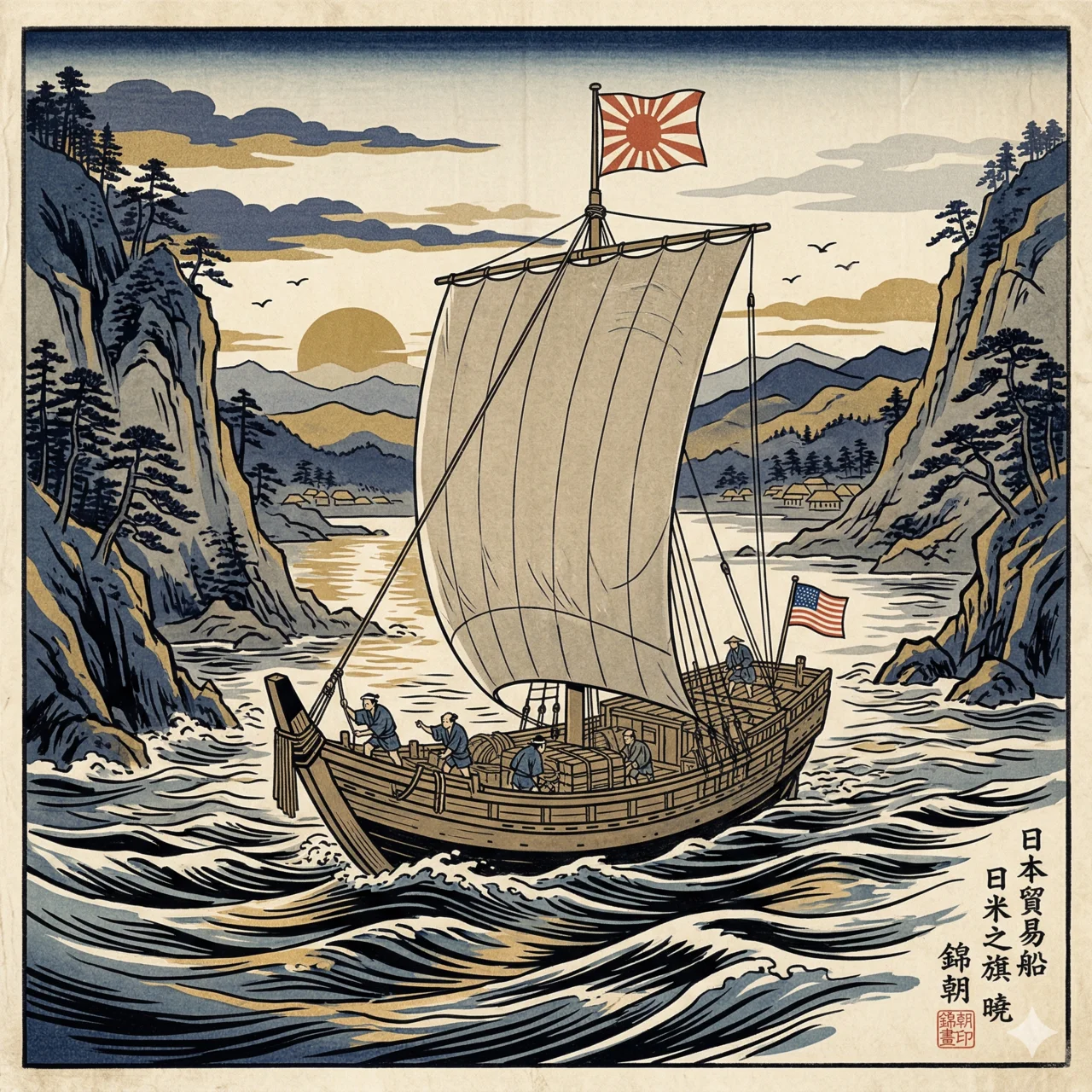
A Cultural Mirror: Two Companies, One Philosophy
Tokio Marine's corporate vision is "To Be a Good Company" — a phrase that appears throughout its official communications. The company states explicitly that "profits are not the be all and end all of existence, but a natural progression of doing the best for customers, employees and society" 6. CEO Masahiro Koike holds the formal dual title of President and Group Chief Culture Officer — a structural statement, unique among major global insurers, that culture is not an HR function but a strategic competitive asset 7.
Berkshire shareholders will recognize this philosophy. Warren Buffett has spent decades arguing that Berkshire's decentralized management model — acquired companies keep their identity, leadership, and culture — is its greatest competitive advantage. Both companies share a set of principles that are easier to state than to sustain over generations:
Long-term ownership. Tokio Marine has operated continuously since 1879. Berkshire's holding period, in Buffett's famous formulation, is "forever." Both companies think in decades, not quarters.
Decentralized subsidiaries. Tokio Marine's global operations — TMHCC in Houston, PHLY in Philadelphia, Kiln in London, Pure in New York — retain their own brands, leadership, and underwriting cultures. This is precisely how Berkshire manages GEICO, Gen Re, BNSF, and dozens of other subsidiaries.
Balance sheet as moat. Both companies treat financial strength as a competitive weapon in insurance. Counterparties choose NICO because they know it will pay claims through any catastrophe. Tokio Marine's Economic Solvency Ratio of 155% 16 reflects the same philosophy.
The parallels extend to their founders. Eiichi Shibusawa believed morality and economy were inseparable. Warren Buffett has spent half a century arguing that integrity is the most important quality in a business partner. Shibusawa founded 500 companies; Buffett and his successors have acquired hundreds. Both men's legacies are institutions that outlive any individual.
When Koike said Berkshire's values "closely align with ours," he was understating the case.
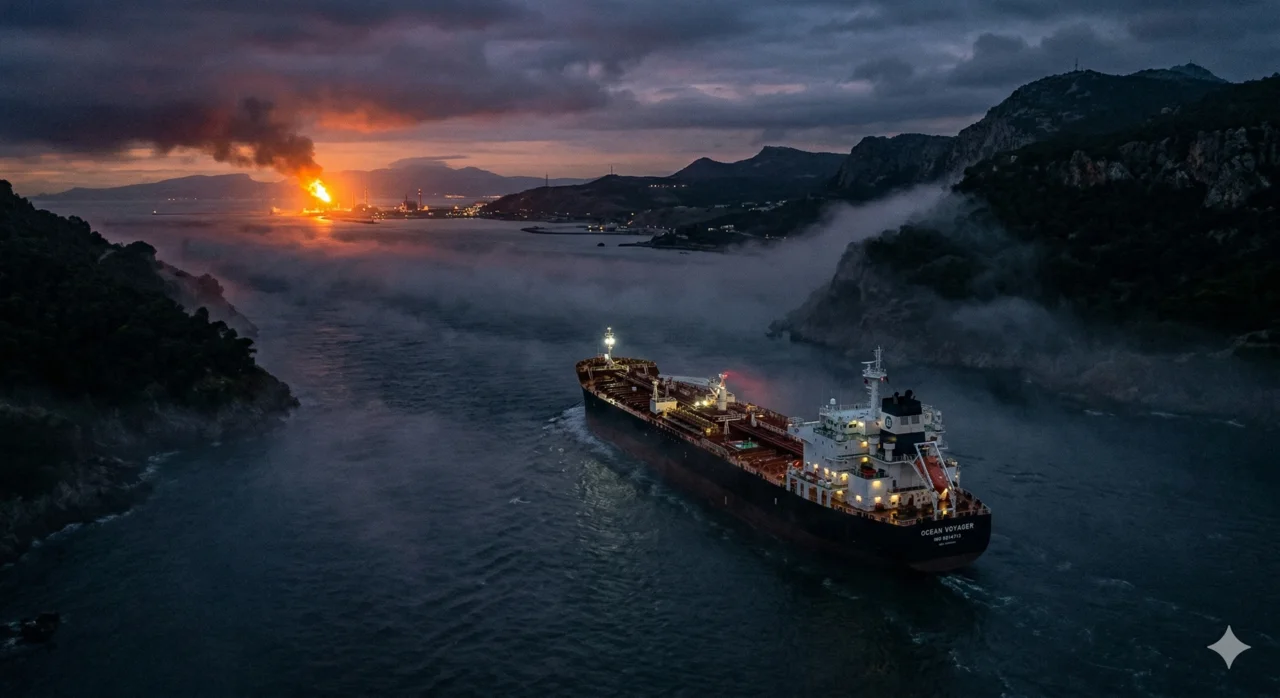
War on the Water: Iran, Hormuz, and the Return of Marine Risk
The name "Tokio Marine" is not accidental. This is a company that was born to insure ships — specifically, the Meiji-era merchant vessels carrying silk and tea through waters that, in 1879, were patrolled by Western navies that Japan could not yet match. Today, those same maritime trade routes are the most dangerous in the world.
On February 28, 2026, the United States and Israel struck Iranian nuclear and military infrastructure ↗. Iran retaliated with drone and missile strikes across the Persian Gulf, damaging multiple tankers. The Strait of Hormuz — through which roughly 20% of the world's oil normally passes — effectively shut down to commercial traffic 12.
The marine insurance market responded with panic. War risk premiums, which hovered at 0.15–0.25% of hull value before the conflict, spiked to 1–10% for Strait of Hormuz transits 15. Major P&I clubs — Gard, Skuld, NorthStandard — issued 72-hour cancellation notices for war-risk extensions in the Persian Gulf 13. Hull insurance rates across the broader Gulf were projected to rise 25–50% 15.
| Metric | Before Feb. 28 | After Escalation |
|---|---|---|
| Hull war risk rate (7-day, % of vessel value) | 0.15–0.25% | 1–10%17 |
| Strait of Hormuz daily vessel traffic | ~135 ships | ~6 ships14 |
| Brent crude (March 2026 vs. Feb.) | — | +~60%16 |
The timing of the Berkshire-Tokio Marine announcement is conspicuous. The Iran conflict began on February 28. The deal was announced on March 23 — exactly 23 days later 121. The WAQS quota-share agreement means NICO is assuming a portion of Tokio Marine's marine portfolio at a moment when premiums are at their highest levels since the Iran-Iraq Tanker War of the 1980s.
This is quintessential Berkshire behavior. Ajit Jain has built NICO's reputation on insuring risks "that no one else has the desire or the capital to take on" 19. Writing reinsurance at peak-cycle marine war risk pricing, backed by Berkshire's $369 billion cash reserve, is exactly the kind of asymmetric bet that has generated outsized returns for decades. If you must insure ships through a war zone, you want to do it when premiums are 40 to 67 times their peacetime levels.
Tokio Marine, for its part, has been notably measured. While European P&I clubs cancelled coverage en masse, Tokio Marine stated it was "monitoring developments" rather than exiting 12. With NICO's capital now behind it, Tokio Marine can selectively underwrite marine war risk at elevated rates — staying in a market that competitors are fleeing.
History has come full circle. Tokio Marine was founded to insure Japanese ships through waters where foreign powers set the rules. In 2026, it finds itself insuring global shipping through waters where the rules have broken down entirely. And this time, it has Berkshire Hathaway as a partner.
The GEICO Playbook: From Minority Stake to Full Ownership?
Berkshire shareholders with long memories will recognize this deal's architecture. In 1976, Berkshire first invested in GEICO when the auto insurer was near-bankrupt, building a partial stake of roughly 15%. It took 20 years before Buffett acquired the rest in 1996 for $2.3 billion. The interim decades were spent building trust, observing management, and letting the relationship prove itself 19.
The Tokio Marine structure rhymes powerfully. A small initial stake (2.49%). An option to grow (to 9.9%). An operational partnership (the quota share) that creates daily interaction between the two companies. A long time horizon (10-year partnership). And a "friendly standstill" that keeps the door open for deeper involvement.
The sogo shosha precedent reinforces the pattern. Those stakes started at roughly 5% in 2020 and have grown to 8.5–10.2% as of 2026 — with Berkshire receiving permission to exceed the initial 10% ceiling in some cases 11. If Tokio Marine's partnership performs as expected, the progression from 2.49% to 9.9% and beyond seems not just possible but probable.
| Transaction | Year | Initial Move | Outcome |
|---|---|---|---|
| GEICO | 1976 → 1996 | ~15% stake ($45M) | Full acquisition ($2.3B, 20 years later) |
| General Re | 1998 | Reinsurance relationship → full acquisition | $22B, +$14B float25 |
| Alleghany | 2022 | Long industry relationship | Full acquisition ($11.6B, +$14B float) |
| Sogo shosha | 2020 → present | ~5% stakes ($6B) | Now 8.5–10.2%, worth ~$43.8B12 |
| Tokio Marine | 2026 | 2.49% + WAQS ($1.8B) | Option to 9.9%; full acquisition? |
A full acquisition of Tokio Marine would be a $72 billion+ transaction at current market capitalization — dwarfing any deal in Berkshire's history. It would also face significant Japanese regulatory and political hurdles. But Berkshire has $369 billion in cash, and Greg Abel has signaled that Japan is a core strategic market. The question is not whether Berkshire can afford it, but whether the relationship matures to the point where both sides want it.
For now, the $1.8 billion investment is what Buffett would call a "foot in the door." National Indemnity — the company Buffett bought for $8.6 million in 1967 — just wrote a $1.8 billion check to a company founded in 1879 by the man on Japan's highest-denomination banknote. The return on that original $8.6 million is, at this point, effectively incalculable.
Conclusion
The Tokio Marine partnership is the most strategically significant deal of the early Abel era. It is not the largest by dollar value — OxyChem cost $9.7 billion — but it is the most architecturally complex and the most revealing of where Berkshire is headed.
The deal generates float through the quota share. It deepens Berkshire's Japan footprint from passive equity to operational partnership. It arrives at a moment of extreme marine insurance dislocation, allowing NICO to write reinsurance at peak-cycle pricing. And it connects two companies whose founding philosophies — Shibusawa's "morality and economy are one" and Buffett's insistence on integrity above all — are remarkably aligned.
For Berkshire shareholders, the message is clear: Greg Abel is not merely continuing the Buffett playbook. He is extending it — across the Pacific, into the insurance markets of the world's third-largest economy, and through the fog of war in the Persian Gulf. The son of Alberta is building on the legacy of Omaha, and the company co-founded by the father of Japanese capitalism is his newest partner.
The ships are still sailing. Now Berkshire is insuring them.
References
-
Berkshire Hathaway to Invest $1.8 Billion in Tokio Marine - insurancejournal.com ↩↩↩↩
-
NICO to Acquire 2.5% Stake in Tokio Marine - reinsurancene.ws ↩↩↩↩↩
-
Sullivan & Cromwell Advises on Tokio Marine–Berkshire Partnership - sullcrom.com ↩↩↩
-
Abel Is Building on Buffett's Best Japan Investment - fool.com ↩↩
-
Tokio Marine Holdings: Company History - tokiomarinehd.com ↩↩↩↩
-
Tokio Marine Holdings: Corporate Philosophy - tokiomarinehd.com ↩
-
Tokio Marine Holdings: CEO Message - tokiomarinehd.com ↩
-
Tokio Marine — Wikipedia - en.wikipedia.org ↩↩
-
Eiichi Shibusawa — Wikipedia - en.wikipedia.org ↩↩
-
Buffett's Japan Bet Earns $24 Billion in 6 Years - fortune.com ↩↩↩
-
Buffett Hikes Stakes in Five Japanese Trading Houses to Near 10% - cnbc.com ↩
-
Iran's Grip on Hormuz After a Month of War - insurancejournal.com ↩↩↩↩
-
Maritime Insurers Cancel War Risk Cover in Gulf - aljazeera.com ↩
-
Oil Supertanker Rates Soar as Insurers Drop War Risk - cnbc.com ↩
-
Marine Hull Insurance Rates Could Rise 50% — Marsh - reinsurancene.ws ↩↩
-
Tokio Marine International Business Profit Hits ¥235.4B in Q2 FY25 - reinsurancene.ws ↩↩↩↩
-
Berkshire Executes Major Post-Buffett Investment - finance.biggo.com ↩
-
Kenkichi Kagami — Wikipedia - en.wikipedia.org ↩
-
How Berkshire Hathaway Thinks of Reinsurance Float - artemis.bm ↩↩↩↩